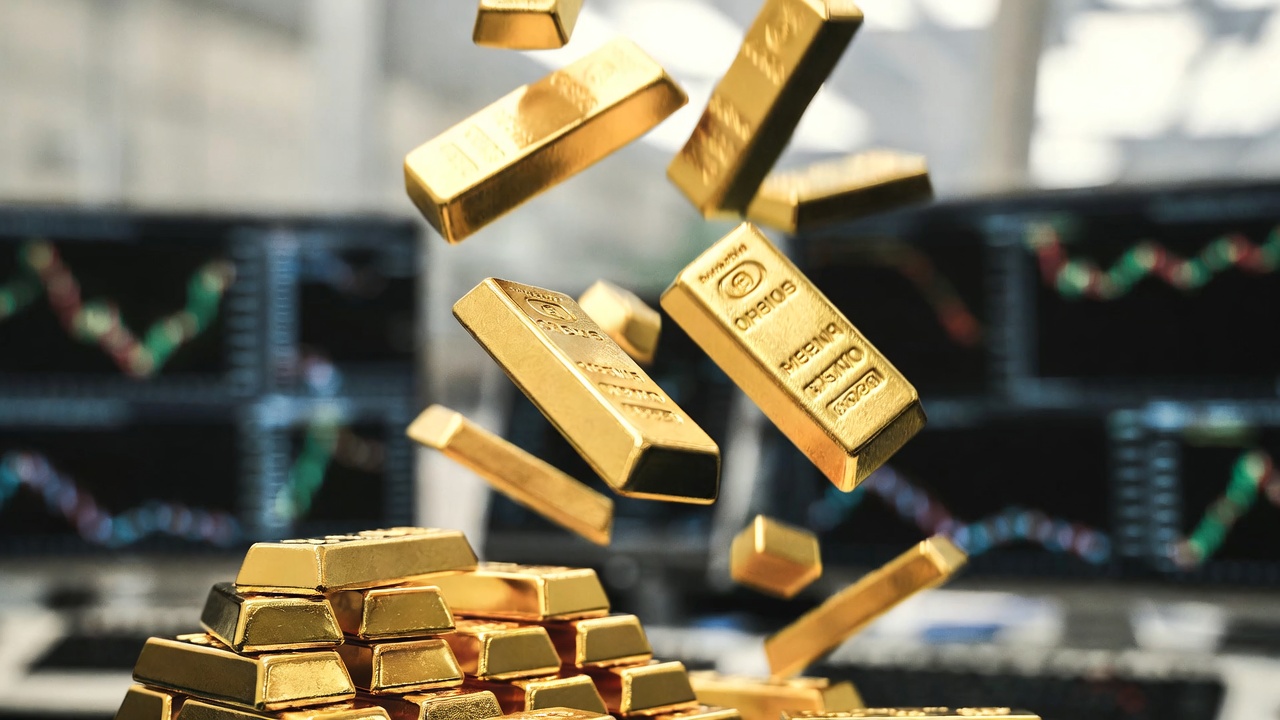
Gold prices drifted lower in Asian trade on Tuesday, snapping a two-day positive streak for the precious metal.
Experts believe that the market lacked strong follow-through selling, and demand from central banks has created a floor for the prices.
Even though gold prices fell on Tuesday, the yellow metal remained above the psychologically-crucial level of $5,000 per ounce.
The supportive market sentiment, driven by the resolution of political uncertainty following Japan’s snap election on Sunday and indications of reduced Middle East tensions, is a significant factor exerting downward pressure on the safe-haven precious metal.
The COMEX gold contract last traded at $5,045.59 per ounce, down 0.7% from the previous close.
Fundamentals keeping gold afloat
However, gold is currently receiving a boost, supported by expectations that the US Federal Reserve (Fed) will implement at least two 25-basis-point rate cuts in 2026.
These anticipated rate cuts, combined with lingering concerns about the US central bank’s independence, are contributing to a weakened dollar, which is currently trading near its lowest point in over a week.
This depressed state of the dollar acts as a significant tailwind for the non-yielding gold, according to Haresh Menghani, editor at FXStreet.
Traders also seem reluctant to place aggressive directional bets ahead of Wednesday’s release of the crucial US Nonfarm Payrolls (NFP) report and the latest US consumer inflation figures on Friday.
On Monday, White House economic adviser Kevin Hassett stated that the US could see slower job gains in the near future.
This projected slowdown, which adds to an ongoing debate at the Federal Reserve, is attributed to a combination of slower labor force growth and increased productivity.
China’s gold demand
The People’s Bank of China (PBOC) extended its gold accumulation streak for a 15th consecutive month in January, according to a Saturday report.
This sustained demand for gold is attributed to ongoing fiscal instability in major global economies.
Concurrently, reports indicated that Chinese regulators have cautioned financial institutions to reduce their exposure to US Treasuries.
This guidance stems from concerns over both concentration risk and market volatility associated with the US debt.
China’s ongoing gold acquisition represents a fundamental strategic shift in its reserves policy, rather than a short-term tactical move, according to B2PRIME Group’s founder and executive director Eugenia Mykuliak.
The purchase of approximately 40,000 ounces in January marks the extension of a 15-month buying trend.
This sustained accumulation underscores Beijing’s long-term objectives: to reduce its heavy reliance on the US dollar, enhance the international standing of the renminbi for cross-border transactions, and establish a neutral reserve asset that offers protection against geopolitical uncertainties.
“In an environment of elevated Treasury yields, recurring sanctions risk, and a more fragmented financial system, gold offers China a politically neutral store of value that does not rely on Western clearing infrastructure,” Mykuliak said.
China still has the capacity to increase its gold reserves. Given that gold makes up a small fraction of its total reserves, further purchases are possible without negatively impacting the country’s policy balance, she added.
While short-term price swings will still depend on interest rates and dollar strength, steady official buying is increasingly creating a structural floor under the market – turning gold into a long-term strategic holding rather than a purely cyclical commodity.
Silver dips
The price of silver dropped more than 2% to $80.243 during Tuesday’s Asian trading session.
This decline is largely attributed to a slight recovery in the dollar, prompting traders to take profits following recent gains.
Market participants are currently re-evaluating the overall strength of the economy and inflation outlook.
Improved US economic data last week bolstered the greenback, concurrently exerting downward pressure on commodity prices denominated in the dollar.
Specifically, US consumer confidence showed a minor improvement in February, with the University of Michigan’s Consumer Sentiment Index climbing to 57.3. This figure, which rose from 56.4 in January, surpassed the market expectation of 55.
“However, geopolitical tensions and uncertainty could boost a safe-haven asset such as Silver,” Lallalit Srijandorn, editor at FXStreet, said in a report.
Despite pushing back against any attempts at intimidation, Iran’s President Masoud Pezeshkian characterised last week’s nuclear talks with the US as “a step forward.
The post Gold lowers on easing tensions, but rate cut bets, China demand provide floor appeared first on Invezz